

The riskiest moment is after the sale
The most dangerous moment in buying sheep is not always the sale. It is the moment the new animals arrive home.
Many sheep look healthy when they are bought. They may walk normally, eat well and show no obvious signs of disease. But that does not mean they are safe to mix with the main flock immediately.
Some diseases and parasite problems are not visible on the first day. Transport stress can reveal problems that were hidden. Feed changes can upset digestion. New animals may carry parasites, lice, foot problems or infections that your existing flock has never been exposed to.
Prepare before arrival
Have the pen, water, feed, fence and separate tools ready before the trailer reaches the farm.
Observe quietly
Watch appetite, manure, feet, breathing and behaviour before handling more than necessary.
Check and decide
Use the period to complete health checks, treatments or veterinary advice before mixing.
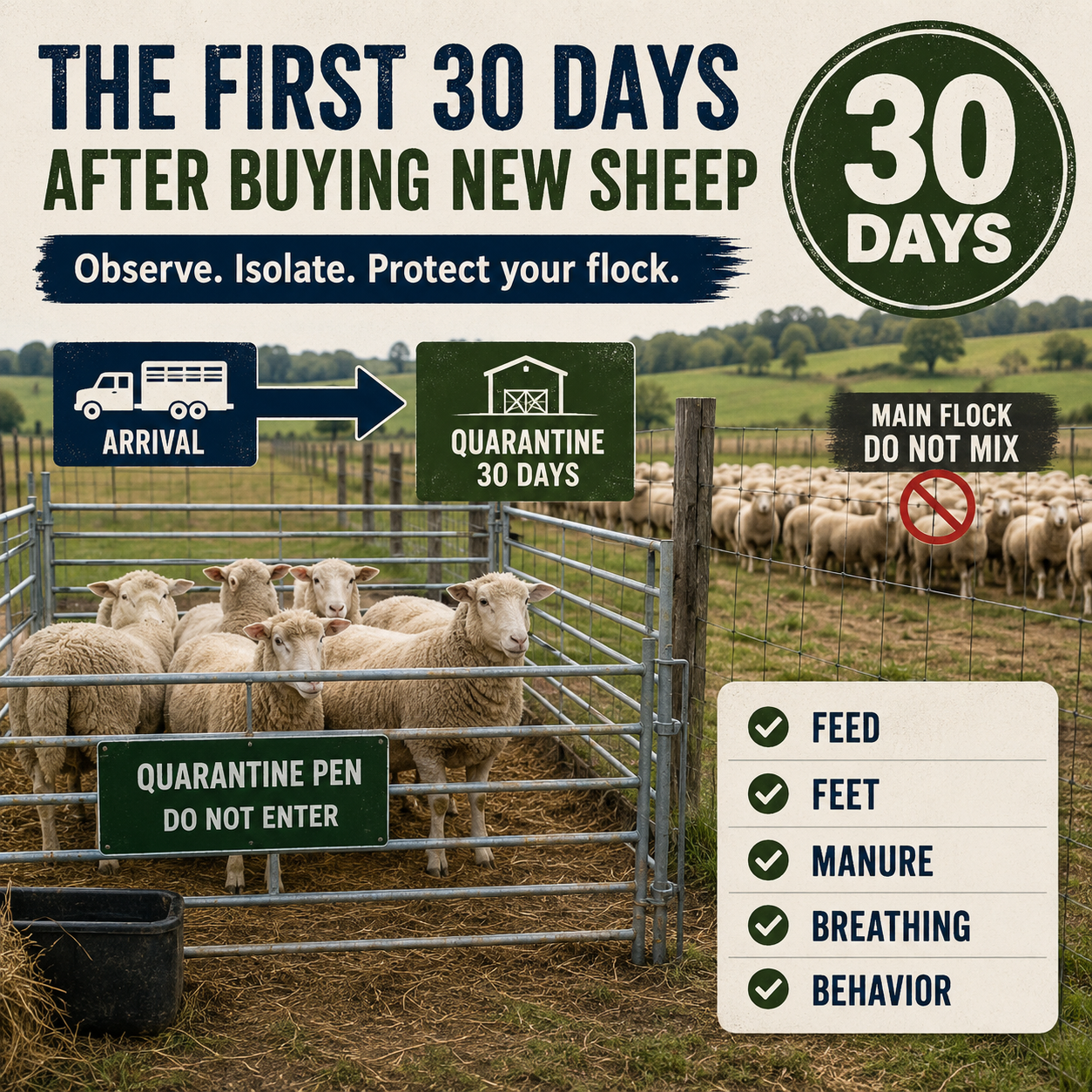
Day 0: Prepare before the sheep arrive
Quarantine should not start after the trailer gate opens. It should be prepared before the animals arrive. A quarantine area does not need to be fancy, but it must be separate.
New sheep should not share feed space, waterers or close fence-line contact with the main flock. Avoid nose-to-nose contact. If possible, place the quarantine area far enough away that direct contact is not possible.
- Clean water
- Feed similar to what the animals were eating before
- Shelter from heat, cold, wind and rain
- A secure fence
- Separate buckets, troughs and handling equipment
- A place to record daily observations
Arrival day: Let them rest
Transport is stressful. Even short trips can affect appetite, hydration and behaviour. When the sheep arrive, unload calmly. Avoid chasing, shouting or unnecessary handling. Give them water first. Offer familiar feed if possible. Do not make major diet changes on the first day.
Watch them from a distance. Are they alert? Do they drink? Do they begin to explore? Do they lie down and rest? Do any stand apart, cough, limp or show diarrhea?
The first week: observe before interfering
During the first week, the most important job is observation. Check the sheep at least once daily. Twice daily is better if possible. Watch before they notice you. A sheep may hide signs when approached, but behaviour at rest can reveal more.
- Appetite and water intake
- Manure consistency
- Coughing or nasal discharge
- Lameness or difficulty rising
- Wool loss, rubbing or wounds
- Isolation from the group
- Abnormal posture or dullness
Do not rush to mix them because they “look fine.” Looking fine after two days is not enough.
Health history matters
New sheep should not arrive as a mystery. Before purchase, ask for vaccination history, parasite treatment history, disease status, movement documents where required and any recent treatments. Ask whether the flock has had footrot, lice, Ovine Johne’s Disease, abortion issues, resistant worms or other local concerns.
The seller may not know everything. That is common. But every unknown increases risk.
Why 30 days?
Thirty days is a practical minimum used in many biosecurity recommendations because it gives time to observe new animals before they join the main flock. Some signs of disease do not appear immediately. Some animals are stressed by transport and only show problems after arrival. Some parasite problems become clearer after a short period.
Thirty days is not magic. It will not catch everything. Some diseases need longer monitoring. Sale barn animals or animals with unknown history may require more caution. But 30 days is far safer than same-day mixing.
Feed changes should be gradual
A sudden feed change can create problems even in healthy sheep. If possible, ask what the animals were eating before purchase. Start with a similar feed and change gradually over two to three weeks. This is especially important when moving from pasture to grain, from dry feed to lush pasture, or from one concentrate mix to another.
Feet deserve attention
The quarantine period is a good time to inspect feet. Watch the sheep walking on flat ground. Check for uneven weight bearing, short stride, reluctance to move, kneeling, swelling, smell, discharge or overgrown hooves. If you suspect infectious foot disease, get proper advice before bringing those sheep near the main flock.
When quarantine ends
At the end of the quarantine period, do not mix animals automatically. Review the records. Have they eaten normally? Any diarrhea? Any coughing? Any lameness? Any unexplained weight loss? Were treatments completed? Are vaccinations up to date according to your plan?
If the answer is not clearly good, extend quarantine or seek advice. When mixing finally happens, do it calmly. Avoid overcrowding. Watch for bullying, feed competition and stress. Continue observing closely for another week.
Final thought
The first 30 days after buying sheep are not wasted time. They are insurance. A new sheep can improve your flock, but only if it enters safely.