

Buying sheep should start with health, not price
Buying a sheep should never start with the price. Price matters, breed matters, and age, weight, wool, lambing history and genetics can all matter too. But before any of those details, there is one simple question: is this animal healthy enough to bring onto your farm?
A sheep can look acceptable at first glance and still carry problems that become expensive later. Lameness, respiratory disease, foot issues, poor body condition, abscesses, diarrhea, skin problems or parasites can turn a cheap purchase into a long-term loss. In a small flock, one bad introduction can affect every animal you already own.
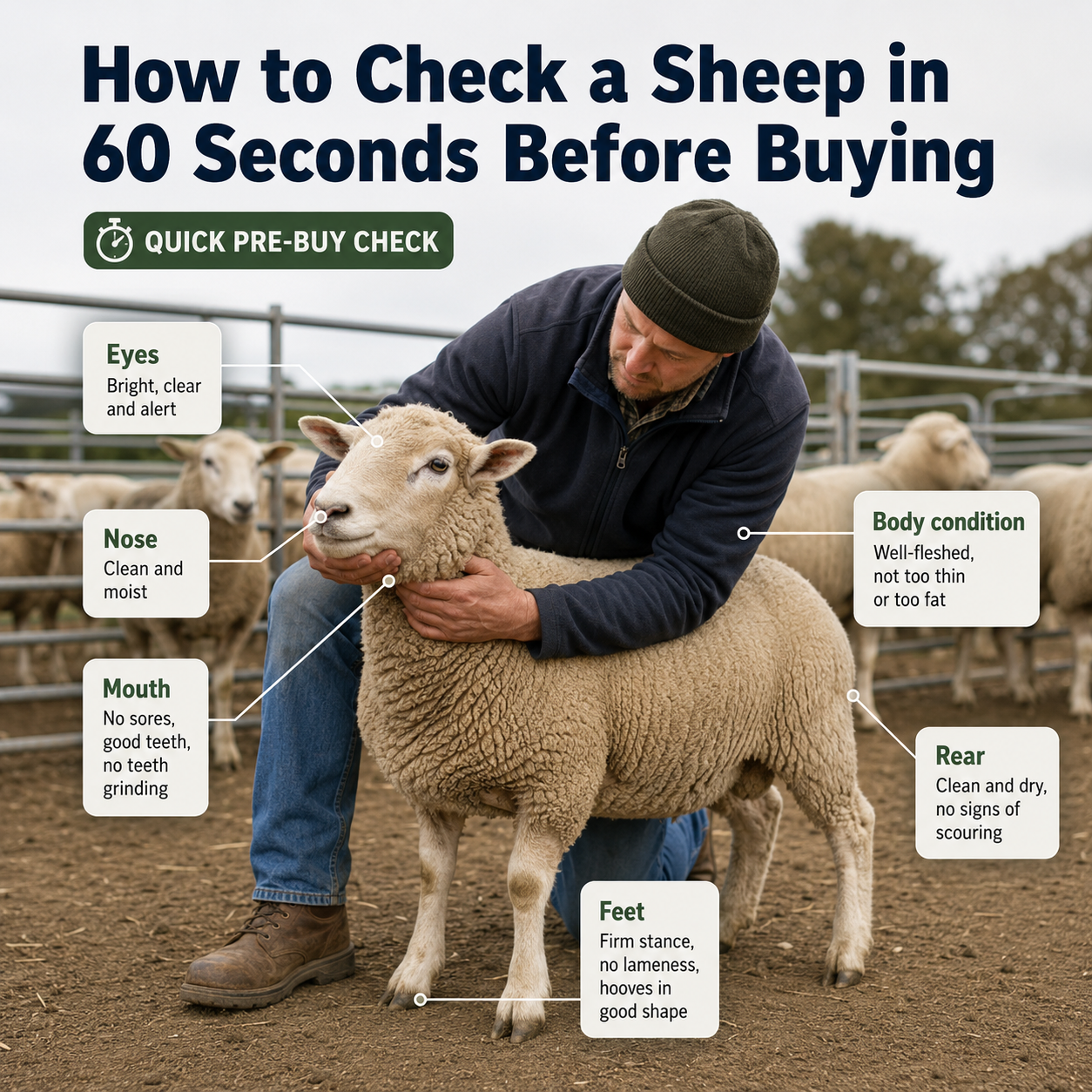
1. Start before touching the sheep
Watch the animal from a short distance before it is handled. A healthy sheep should look bright, alert and responsive. It should notice people, move with the group and stand normally. A sheep that is dull, isolated, slow to rise or standing with an unusual posture deserves caution.
Do not ignore movement. Ask the seller to let the sheep walk. Look for even weight on all four legs. Watch for short steps, head bobbing, reluctance to move, carrying one leg, kneeling or obvious discomfort. Foot problems can be costly, difficult to clear and risky to introduce into a clean flock.
If the sheep is already lame before purchase, assume it is not a small detail.
2. Look at the eyes, nose and breathing
The eyes should be clear, bright and open. Squinting, discharge, injury or a dull expression are warning signs. Then look at the nose and breathing. There should be no heavy panting, persistent coughing, laboured breathing or obvious nasal discharge.
A small amount of dust around the nose is not the same thing as active discharge, but wet, discoloured or repeated nasal discharge should raise concern. Respiratory problems are not something to “see how it goes” with after buying. If several animals in the group are coughing, that is even more important.
3. Check the mouth and face
Look around the lips and nose. Avoid animals with visible sores, scabs or lesions around the mouth unless you fully understand the cause and risk. This is especially important if you have lambs, pregnant ewes or a clean flock at home.
Also watch how the animal eats if feed is available. A sheep that cannot chew well, drops feed, avoids feed or shows excessive salivation may need closer inspection.
4. Check the rear end
The rear of the sheep tells you more than many buyers think. A clean rear is a good sign. Diarrhea, soft manure stuck to the wool, staining, swelling, wounds or prolapse are all warning signs. Diarrhea can be caused by stress, feed change or parasites, but it can also be linked with infectious disease.
For ewes, if possible and appropriate, look at the udder and teats. Avoid ewes with obvious udder injury, swelling, hard quarters or damaged teats unless you are specifically prepared to manage that issue. For rams, testicles should be normal, even and free from obvious injury or swelling.
5. Look past the wool
Wool can hide a lot. Do not judge a sheep only from the outside shape. Feel the body if handling is safe and allowed. A sheep may look large because of wool but still be thin underneath.
A very thin animal may have poor nutrition, dental issues, parasite burden, disease or simply poor management history. Some problems can be corrected. Some cannot. Either way, thin animals should not be bought without a reason and a plan.
6. Feet are never a minor detail
Foot health affects movement, feeding, grazing, fertility and welfare. A lame sheep eats less, loses condition, struggles to compete and may infect others if the cause is contagious.
Before buying, inspect as many feet as possible, especially in rams and breeding animals. If the animal cannot be inspected, at least watch it walk carefully. Ask about footrot history, recent treatments and whether a health declaration is available.
7. Ask health-history questions
The 60-second check is only the beginning. If the animal passes the visual check, ask questions. Useful questions include:
- Where did the sheep come from?
- Is the flock closed or are animals regularly brought in?
- What vaccinations have been used?
- When was the last parasite treatment?
- Has there been footrot, lice, scab, abortion, Johne’s disease or other flock-level disease?
- Has the animal recently been treated with antibiotics or other medication?
- Why is it being sold?
A vague answer does not always mean dishonesty, but it does mean uncertainty. Uncertainty is risk.
The 60-second buying checklist
- First 10 seconds: watch the animal from a distance. Is it alert, moving normally and staying with the group?
- Next 10 seconds: watch the walk. Is there lameness, short stride, head bobbing or reluctance to move?
- Next 10 seconds: check eyes, nose and breathing. Are the eyes clear? Any coughing, panting or nasal discharge?
- Next 10 seconds: check mouth and face. Any sores, scabs, swelling or excessive saliva?
- Next 10 seconds: check rear, wool and skin. Any diarrhea, wounds, wool loss or crusty areas?
- Final 10 seconds: feel body condition if possible and ask the first health-history question.
Final thought
Buying sheep is not only about finding animals. It is about protecting the flock you already have. A one-minute check will not catch everything, but it can stop many expensive mistakes before they enter your gate.