

BREEDING GROUPS
Breeding Groups: Why One Ram Is Not Just One Ram
A practical sheep breeding management article about ram identity, ewe groups, breeding dates and lambing windows.
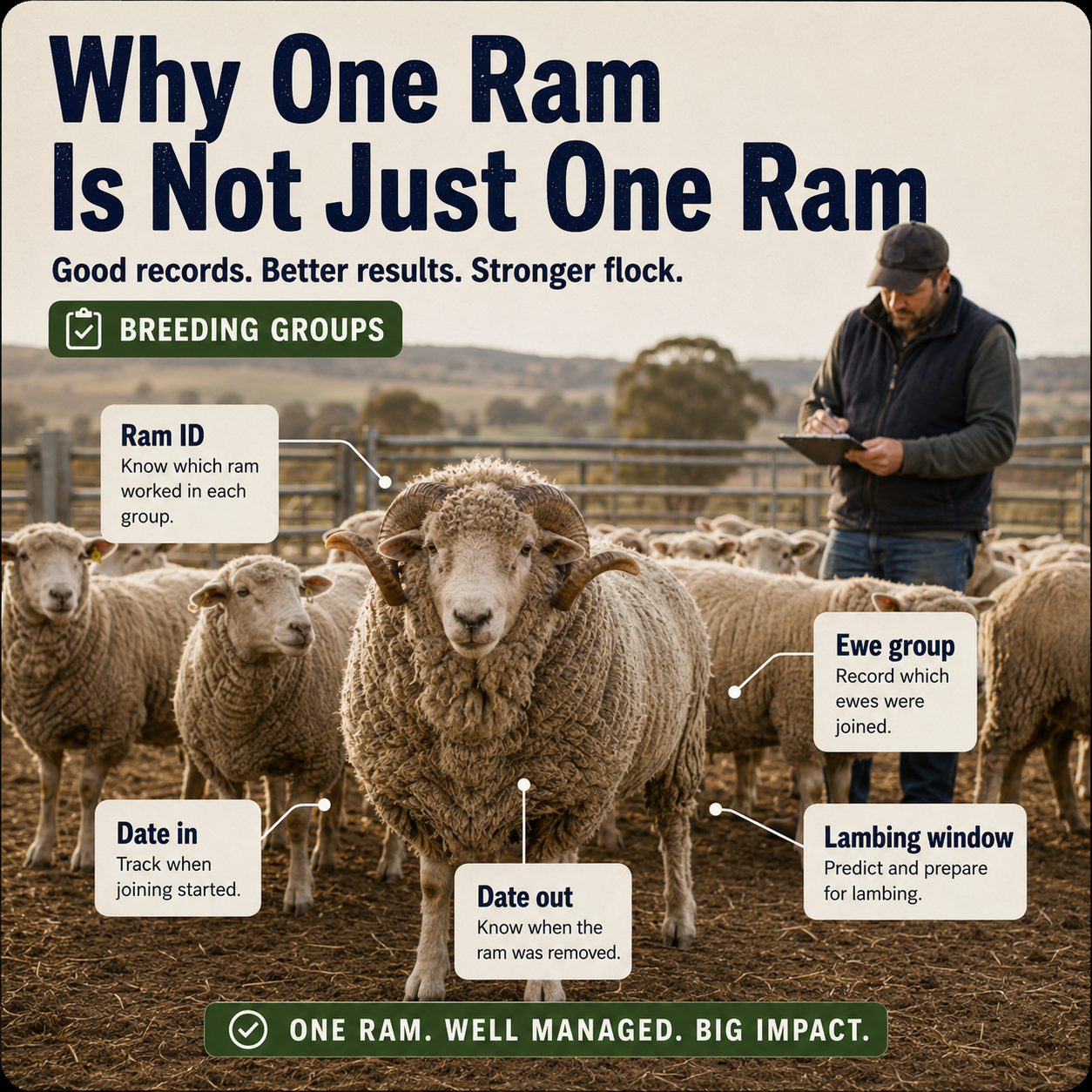
A practical sheep breeding management article about ram identity, ewe groups, breeding dates and lambing windows.
A ram is not just “the male in the field.”
One ram can shape the next lambing season, the timing of births, the quality of lambs, the number of open ewes, and the future genetics of the flock. That is why breeding groups should not be treated casually.
A breeding group is not only about putting a ram with ewes. It is about knowing which ram was used, which ewes he served, when he was introduced, when he was removed, and what results came later.
Many farms plan breeding by date: put the ram in this week, take him out after a month, and lambing should start around this time.
That is useful, but it is not enough.
Before breeding season, the ram should be checked. His feet, body condition, movement, testicles, appetite, and general health all matter. A ram with poor feet may not cover ewes properly. A ram in weak condition may lose performance during the season. A ram with hidden problems can create a poor lambing result months later.
If the ram fails, the problem appears much later — when ewes return empty or lambing is weaker than expected.
One ram can only do so much.
The right number of ewes per ram depends on age, breed, condition, terrain, season, and management. A mature, healthy ram may handle a larger group than a young ram. A difficult landscape or large pasture can reduce effective coverage. Poor condition, heat, lameness, or illness can also reduce performance.
The mistake is assuming that “one ram is enough” without checking whether he is actually doing the job.
If you use more than one ram and do not record breeding groups, you lose information.
Later, when lambs are born, you may not know which ram produced which lambs. That makes selection harder. It also makes it difficult to compare ram performance.
Which ram produced strong lambs? Which ram produced more singles or twins? Which ram’s lambs grew better? Which ram’s daughters should be kept? Which ram may be creating problems?
Without breeding group records, these questions become guesses.
The day a ram enters a group is not just a management date. It is the start of a lambing window.
If the ram is introduced for 35 days, lambing will also be spread across a window. If the ram stays too long, lambing becomes more stretched. A stretched lambing period can make feeding, observation, labor, and lamb management more difficult.
Shorter, clearer breeding windows make later management easier.
Breeding groups are also about prevention.
Young females, replacement ewe lambs, related animals, or animals not ready for breeding may need separation. If rams are not controlled, the flock may end up with lambing dates and parentage you did not plan.
A ram in the wrong place for one night can change the whole season.
For each breeding group, record ram ID, ewe group, date ram joined, date ram removed, number of ewes, any ram health issues, expected lambing window, actual lambing result, empty ewes, and weak lambs or problems.
These records turn breeding from memory into management.
One ram is not just one ram.
He is a genetic decision, a calendar decision, a lambing-season decision, and a financial decision.
Good breeding group management helps you understand not only what happened this season, but why it happened.