

LAMBING PREP
How to Prepare a Simple Lambing Kit Before the First Ewe Gives Birth
A simple, practical lambing kit checklist for sheep farmers before lambing season starts.
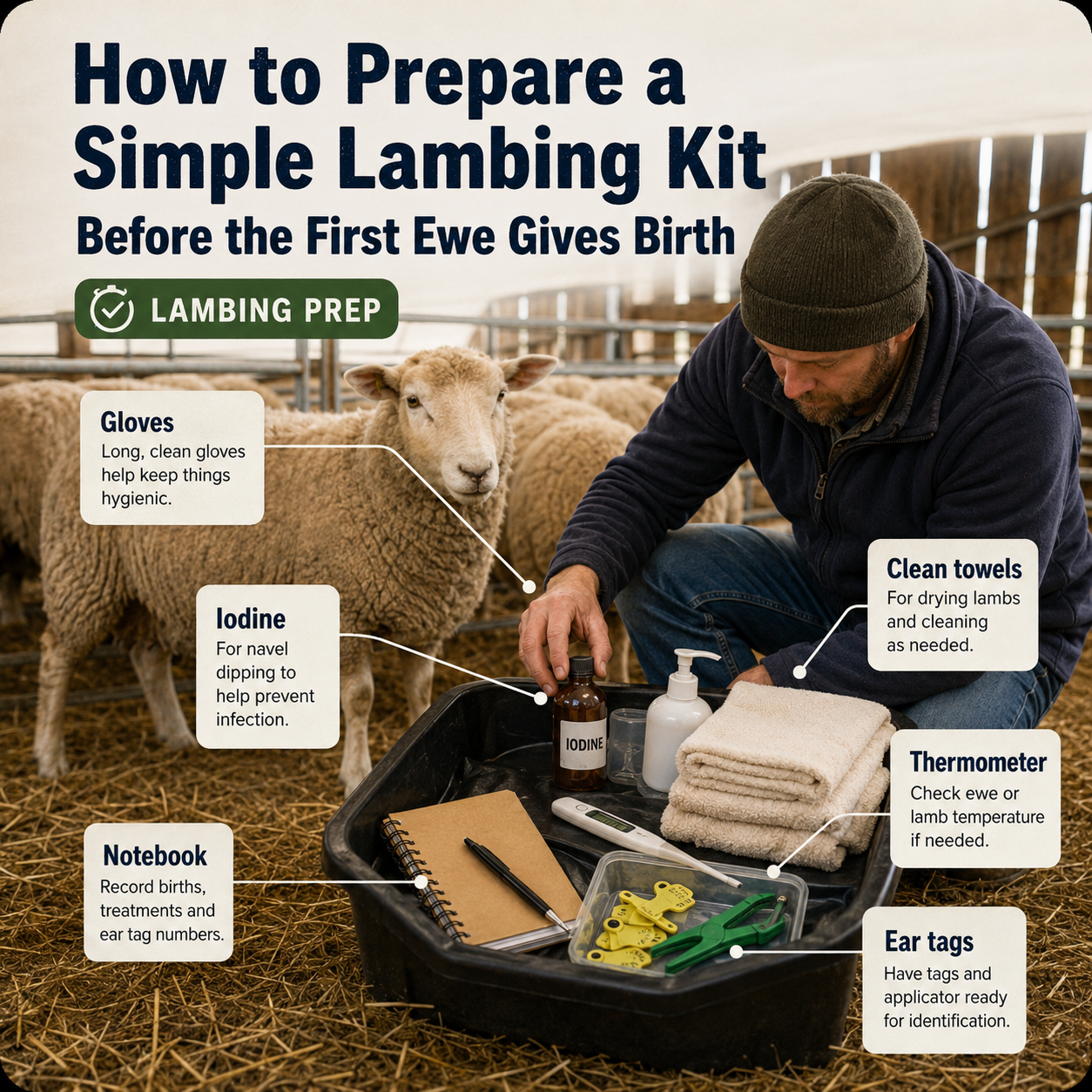
A simple, practical lambing kit checklist for sheep farmers before lambing season starts.
Lambing season does not become stressful on the day the first ewe gives birth. It becomes stressful when the first ewe gives birth and the things you need are in different places, dirty, missing, or not ready.
A lambing kit does not need to be complicated. It does not need to look like a veterinary clinic. But it should be clean, easy to reach, and prepared before the first lamb arrives.
The goal is simple: when something happens, you should not waste time searching.
Use a plastic box, bucket, toolbox, or any container that can be closed and cleaned. Keep it in a dry place near the lambing area, not inside the dirty bedding.
Label it clearly. During lambing season, everyone on the farm should know where it is. If only one person knows where the kit is, it is not really ready.
A simple lambing kit can include clean disposable gloves, lubricant, clean towels or cloths, iodine or navel dip, a thermometer, a notebook or printed lambing sheet, a pen or marker, ear tags and applicator if used, a small flashlight or headlamp, disinfectant for hands and tools, and a phone number list for the vet or experienced help.
Not every lambing needs intervention. In fact, most should not. But when help is needed, clean hands, clean tools, and calm timing matter.
A lambing kit should not only be about physical tools. It should also include a way to record what happened.
At minimum, record ewe ID, date and time, number of lambs, sex of lambs, any assistance given, weak lambs, stillbirths, mothering problems, udder or milk problems, and notes for future breeding decisions.
This may feel like extra work during a busy week, but these notes become very valuable later. They help you remember which ewe needed help, which lamb was weak, and which animals may need closer attention next season.
After every use, clean or replace what was used. Dirty gloves, wet towels, or contaminated tools do not belong in the kit.
A lambing kit should be checked before the season starts and again during the season. If iodine runs out after the third lamb, the kit was not truly ready.
Having a lambing kit does not mean pulling every lamb or disturbing every ewe.
A good lambing kit supports careful observation. It does not replace patience, experience, or veterinary help.
Watch first. Intervene only when needed. If you are unsure, call for help early rather than late.
The best lambing kit is not the biggest one.
It is the one you can find quickly, use cleanly, and trust when the first ewe gives birth at the worst possible time.
Preparing it before lambing season is one of the simplest ways to reduce panic and improve outcomes.