

SHEEP BEHAVIOUR
A Sheep’s Ears Can Tell You a Lot About Its Mood
A practical guide to reading sheep ear posture as one clue in the animal’s wider body language.
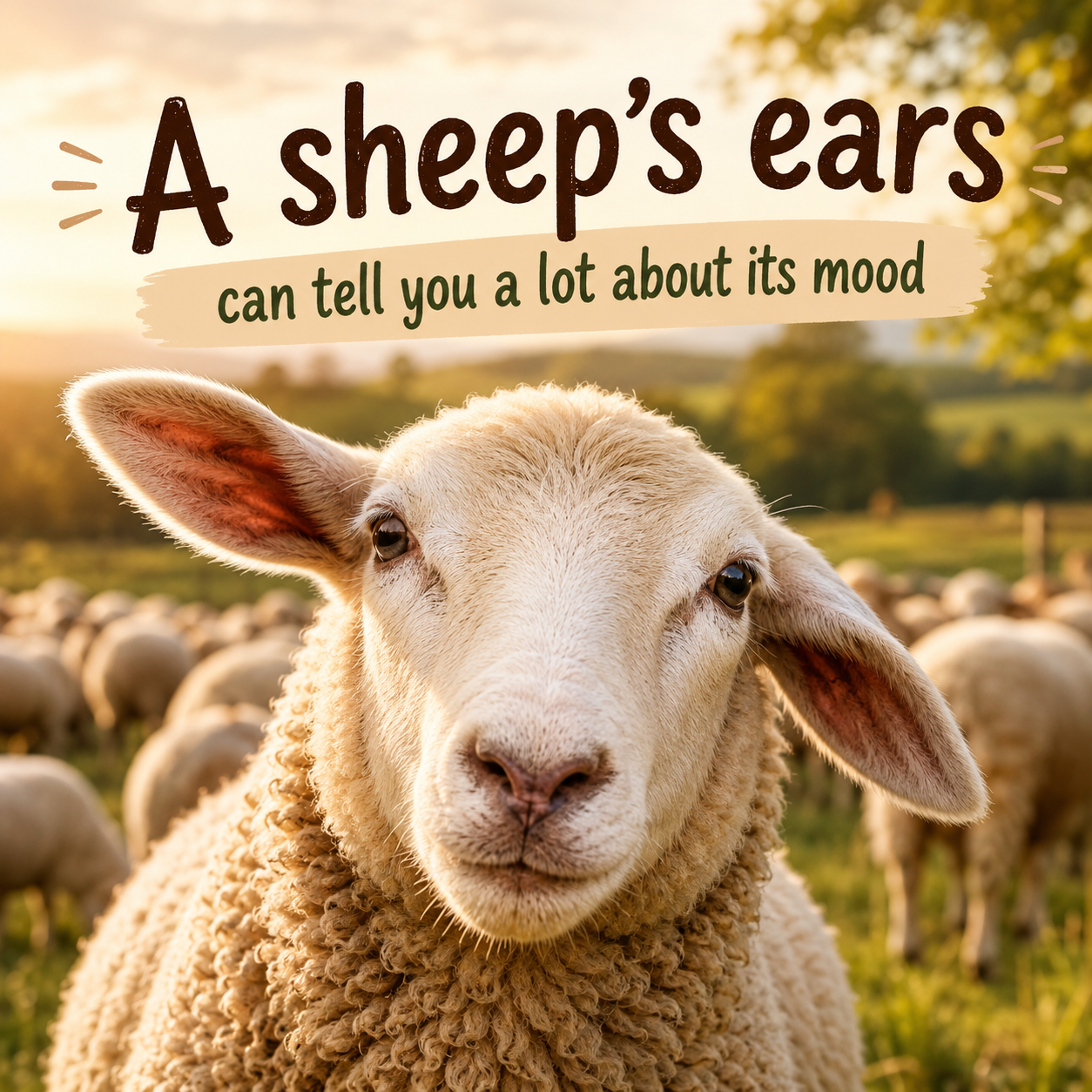
A practical guide to reading sheep ear posture as one clue in the animal’s wider body language.
A sheep does not need to speak to tell you something.
Its body already talks.
The head, eyes, feet, tail, posture and movement all give clues. But one of the easiest signs to miss is the ears.
A sheep’s ears can change position quickly. They may point forward, move sideways, drop, turn back or become tense. These changes do not give a perfect diagnosis, but they can help a farmer read the animal more carefully.
Research on sheep welfare has explored ear postures as possible indicators of emotional state, including how ear positions change in different emotional contexts. (Cambridge University Press & Assessment)
For a farmer, the point is simple: ears are not decoration.
They are part of the animal’s language.
The first rule is important.
Never judge a sheep’s mood from the ears alone.
Ears must be read together with the whole animal.
Is the sheep eating?
Is it chewing cud?
Is it standing away from the group?
Is it lame?
Is it alert because of a dog, vehicle or stranger?
Is it relaxed with the flock?
Is it in pain?
Is it hot?
Is it listening?
The same ear position can mean different things depending on the situation.
A sheep looking toward a noise with forward ears may simply be alert.
A sheep standing stiff with tense ears and wide eyes may be stressed.
A sheep lying quietly with soft posture may be relaxed even if the ears are not in the same position as another animal.
Context matters.
Forward ears often mean attention.
The sheep has noticed something.
It may be watching a person, dog, gate, feed bucket or another animal.
This is not automatically fear. It may be curiosity. It may be expectation. It may be alertness.
If the sheep is standing balanced, breathing normally and staying with the group, forward ears may simply mean, “I am watching.”
But if forward ears come with a stiff body, raised head, wide eyes and a group preparing to move, the flock may be uneasy.
Ears held back can appear in several situations.
Sometimes sheep hold their ears back while calm, feeding or ruminating. Some welfare observation material notes that sheep may show neutral or backward ear positions during calm standing or rumination, and backward positions may increase in positive situations such as feeding or voluntary grooming. (Care About Sheep)
But ears held back can also appear with discomfort, pressure, fear or pain depending on the full body posture.
That is why a farmer should not say, “ears back means this” in every case.
Instead, ask:
Is the animal relaxed or tense?
Is it eating normally?
Is it isolated?
Is it grinding teeth?
Is it limping?
Is it avoiding contact?
Is the group calm?
Ears are a clue, not a verdict.
Drooping ears can be normal for some breeds or individuals.
But if one animal suddenly carries the ears differently from usual, it deserves attention.
A dull sheep with low ears, low head, poor appetite and slow movement may be unwell.
A lamb with drooping ears and weak posture may need quick checking.
A ewe after lambing with dull posture should not be ignored.
Again, the ears are not the diagnosis. They are the signal to look closer.
Ears are useful because they change before bigger signs become obvious.
A sheep may not yet be lame enough to worry you.
A lamb may not yet be clearly sick.
A ewe may not yet be separated from the group.
But small changes in alertness, posture and ear position can make you stop and check.
That is good stockmanship.
Good farmers notice small changes early.
They do not wait until an animal is down.
One of the best habits is to watch the flock before entering the pen.
Stand quietly.
Look at the group.
Which animals are relaxed?
Which animals are watching you?
Which animals are lying normally?
Which ones are standing apart?
Which ears turn first?
Which heads lift?
Which animal does not react like the others?
Then enter slowly and compare.
A single sheep that behaves differently from the group often deserves a closer look.
A sheep’s ears can tell you a lot, but only if you read them with the rest of the body.
Do not turn ear position into a simple chart and ignore the animal.
Instead, use the ears as one more signal.
Forward may mean alert.
Back may mean calm, pressure or discomfort depending on the situation.
Drooping may be normal, or it may be a sign to check the animal.
The best farmer is not the one who memorizes one rule.
The best farmer is the one who notices when an animal is not acting like itself.