

HEATWAVE ALERT
Europe’s Heatwave Is Already Hitting Livestock Production
Extreme heat in Europe is already affecting livestock systems. For sheep farmers, water, shade and reduced handling matter fast.
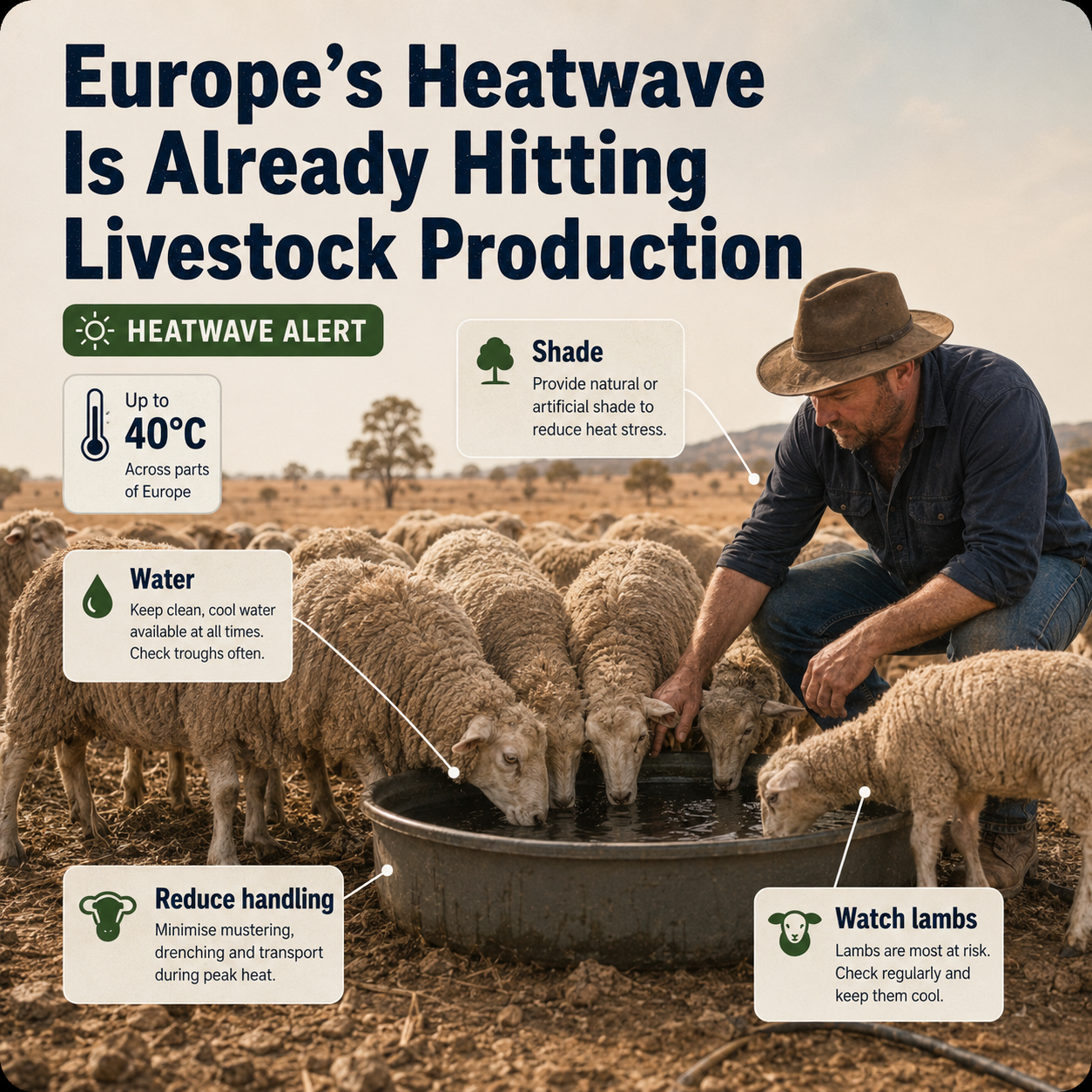
Extreme heat in Europe is already affecting livestock systems. For sheep farmers, water, shade and reduced handling matter fast.
Extreme heat in Europe is no longer just a weather story. It is becoming a livestock production and animal welfare story.
Recent heatwave reports from Europe describe livestock eating less, becoming less active, and producing less during severe heat. For sheep farmers, the important point is simple: heat stress should not be treated as “just a hot day.” It should be treated as a management risk.
Sheep are not outside that risk. High temperatures can reduce feed intake, affect growth, increase stress, and make vulnerable animals struggle faster than expected.
The first signs may be small.
Sheep may graze less. They may stay in shade longer. They may stand instead of lying down. They may breathe faster. They may bunch near water. Lambs may become quieter. Heavy ewes may struggle more. Recently handled, transported, or shorn animals may be more vulnerable.
A sheep that is still standing does not mean everything is fine. Heat stress often starts before collapse or obvious distress.
Many farms say, “They have water.”
But the better question is: can the whole group actually reach it?
In hot weather, water trough access becomes more important. If dominant animals block the trough, weaker sheep and lambs may drink less. If troughs are dirty, intake may drop. If the trough is too far from shade, animals may avoid moving between the two as often as needed.
Hot weather management starts with basic checks: are troughs clean, are they full, is there enough trough space, can lambs reach the water, is water checked more than once per day, and is the flock crowding around one point?
During extreme heat, routine work can become risky.
Moving sheep, sorting, vaccinating, trimming feet, transporting, or shearing during the hottest part of the day can increase stress.
When possible, these jobs should be done early in the morning or delayed until conditions are safer. The same is true for lambs and weak animals. They should not be forced through stressful handling when heat is already challenging their body.
Shade is not a luxury. In hot periods, it is part of animal welfare and production management.
Good shade reduces direct sun exposure, helps animals rest, and reduces the load on water points. Natural shade, shelter design, temporary shade cloth, or adjusted grazing areas can all help, depending on the farm.
The heatwave in Europe is a reminder that livestock systems need heat plans, not only winter plans.
For sheep farmers, the first step is not complicated: check water, check shade, reduce handling, watch breathing, watch lambs, watch heavy ewes, and act before distress becomes obvious.
In extreme heat, small management decisions can make a large difference.