

FMD UPDATE
FMD Cases in Sheep and Goat Herds in Greece: Why Sheep Farmers Should Pay Attention
FMD reports in Greek sheep and goat herds are a reminder to review livestock movement and biosecurity habits.
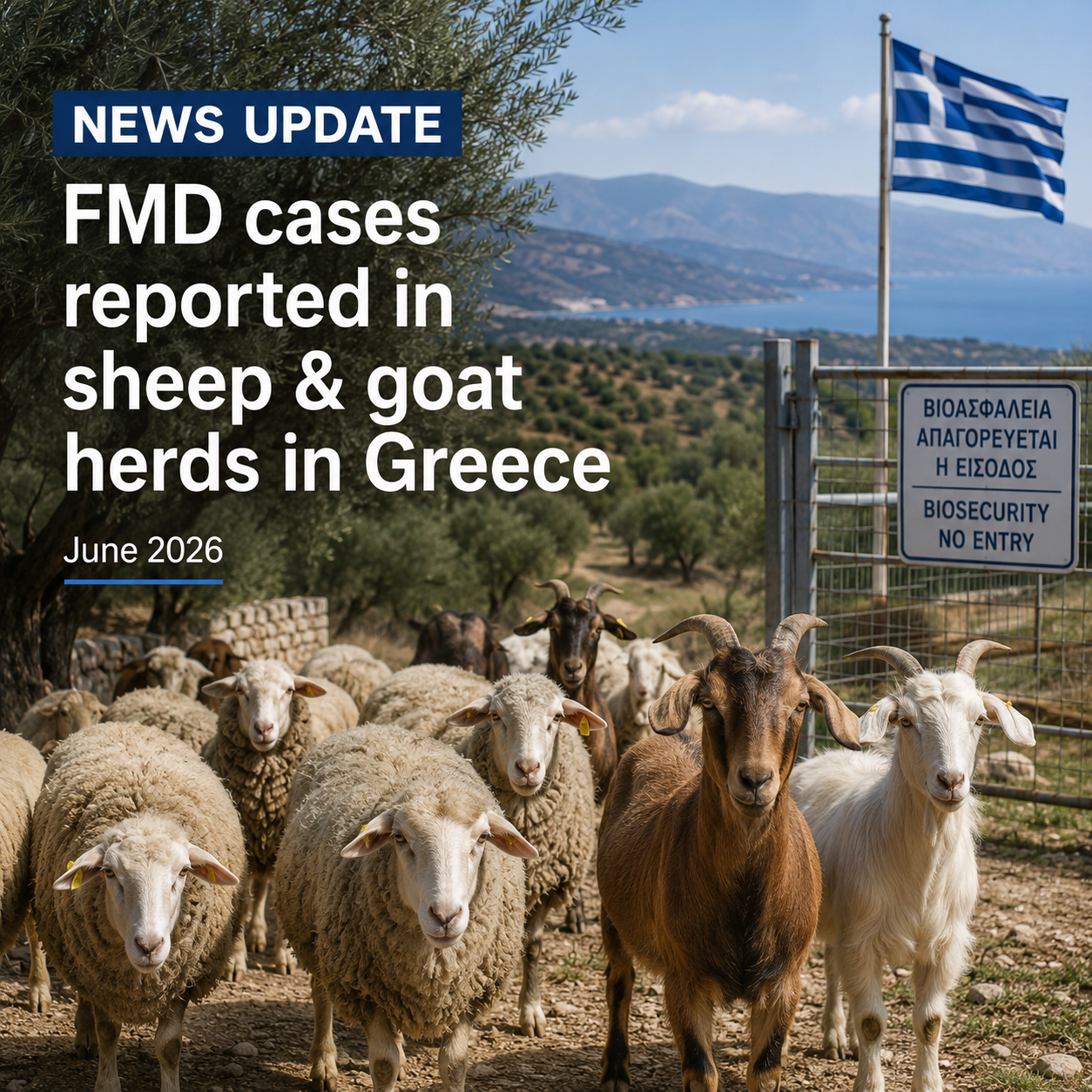
FMD reports in Greek sheep and goat herds are a reminder to review livestock movement and biosecurity habits.
Foot-and-mouth disease is not just a cattle issue.
In June 2026, the European Commission’s ADIS weekly outbreak report listed foot-and-mouth disease virus SAT 1 notifications in Greece, including affected sheep/goat mixed herds and sheep on Lesvos. The ADIS weekly report published four days before this response listed Greece, FMD SAT 1, outbreak references GR-FMD-2026-00121 to GR-FMD-2026-00123, and the affected groups as sheep/goats mixed herd and sheep. (European Commission)
This matters because FMD is one of the diseases that can change the reality of livestock movement, trade and farm biosecurity very quickly.
The UK government’s FMD situation page says there are currently no cases in the UK, but it lists confirmed FMD cases in Greece in March 2026 and Cyprus in February 2026, alongside earlier European cases in Slovakia, Hungary and Germany. (GOV.UK)
For sheep farmers, the lesson is not panic.
The lesson is vigilance.
Foot-and-mouth disease affects cloven-hoofed animals such as cattle, sheep, goats and pigs. It spreads easily and can create major animal health and trade consequences.
Sheep may not always show dramatic signs at first. That is one reason sheep farmers need to take small changes seriously.
A lame sheep is not automatically an FMD case.
A drooling sheep is not automatically an FMD case.
A group that looks dull is not automatically an FMD case.
But when a serious disease is active in a nearby region, farmers should become more careful with movement, visitors, equipment, vehicles and unexplained symptoms.
Many farms think about disease only when an animal becomes visibly sick.
But diseases like FMD are also about movement.
Animals move.
People move.
Trucks move.
Trailers move.
Feed deliveries move.
Vets, shearers, hoof trimmers and buyers move from one place to another.
A farm does not need to be large to have biosecurity risk. Even a small flock can be exposed if new animals, shared equipment or frequent visitors are handled casually.
This is especially important for sheep and goat farms because mixed herds, small holdings and local animal movement can make control harder.
This is a good time for every sheep farmer to review basic biosecurity.
Not because every farm is at immediate risk.
But because good habits are easier to build before an emergency.
Start with animal movement.
Where did the last animals come from?
Were they isolated before joining the flock?
How long were they observed?
Were feet, mouth, temperature, appetite and behavior checked?
Then look at visitors.
Who enters the animal area?
Do they visit other farms?
Do they use clean boots?
Are vehicle wheels kept away from feeding and bedding areas?
Then look at shared tools.
Are trailers cleaned?
Are hoof trimming tools disinfected?
Are borrowed gates, hurdles or handling equipment cleaned before use?
These are basic questions, but they matter.
Farmers should speak to a veterinarian or official authority if they see suspicious signs, especially when several animals are affected or when symptoms appear after animal movement.
Possible warning signs can include sudden lameness, reluctance to move, salivation, fever, blisters or lesions around the mouth or feet, reduced appetite and sudden drops in milk or performance.
Do not try to diagnose a notifiable disease from a Facebook post.
Do not move animals to “see if they improve somewhere else.”
Do not sell animals from a suspect group.
Do not hide the problem.
Fast reporting protects more than one farm.
Most sheep health work is ordinary.
Feet.
Feed.
Parasites.
Lambing.
Condition.
Water.
Stress.
But serious disease news is a reminder that farm hygiene and movement discipline are not optional extras.
They are part of livestock farming.
A farmer cannot control what happens in another country.
But a farmer can control what enters the farm, what joins the flock and how quickly unusual signs are taken seriously.
FMD news should not create fear.
It should create discipline.